Human metapneumovirus (hMPV) is a globally prevalent respiratory virus first identified in 2001. It belongs to the Pneumoviridae family and shares similarities with respiratory syncytial virus (RSV). hMPV primarily affects the respiratory tract, causing illnesses ranging from mild cold-like symptoms to severe lower respiratory infections, particularly in young children, the elderly, and immunocompromised individuals. The virus is enveloped, with a negative-sense single-stranded RNA genome encoding nine proteins, including structural components like the fusion (F) and glycoprotein (G), which play key roles in viral entry and immune evasion. Transmission occurs via respiratory droplets, and infections are most common during late winter and early spring. There is no specific antiviral treatment or vaccine available for hMPV, with management focusing on supportive care. The virus contributes significantly to global morbidity, emphasizing the need for ongoing research and public health efforts. Hence, this biological repository serving as a source for sequences, structures, drugs, vaccines, and RNA therapeutics provides a valuable resource to advance clinical research and accelerate the development of effective interventions. The virus contributes significantly to global morbidity, emphasizing the need for ongoing research and public health efforts.
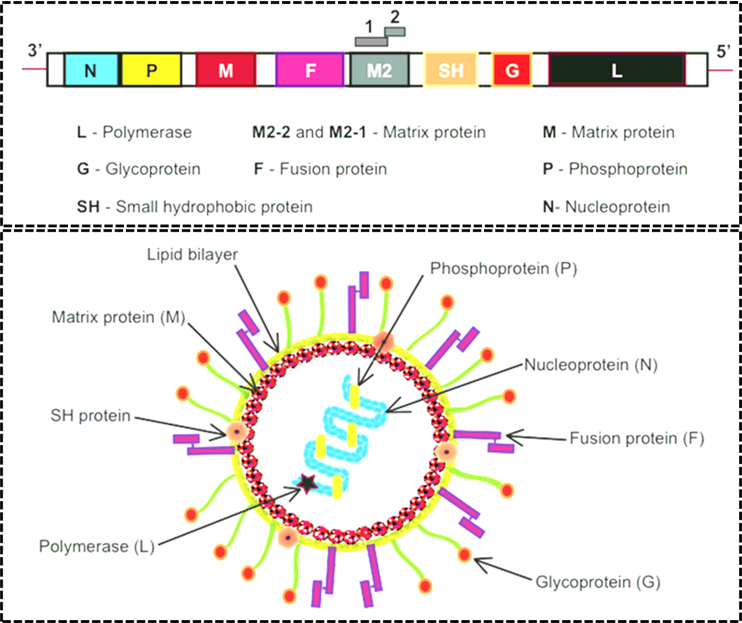
Model structure and proteins encoded by Human Metapneumovirus (hMPV). hMPV model structure indicating viral proteins encoded by the viral genome.
Source: https://en.wikipedia.org/wiki/Human_metapneumovirus